
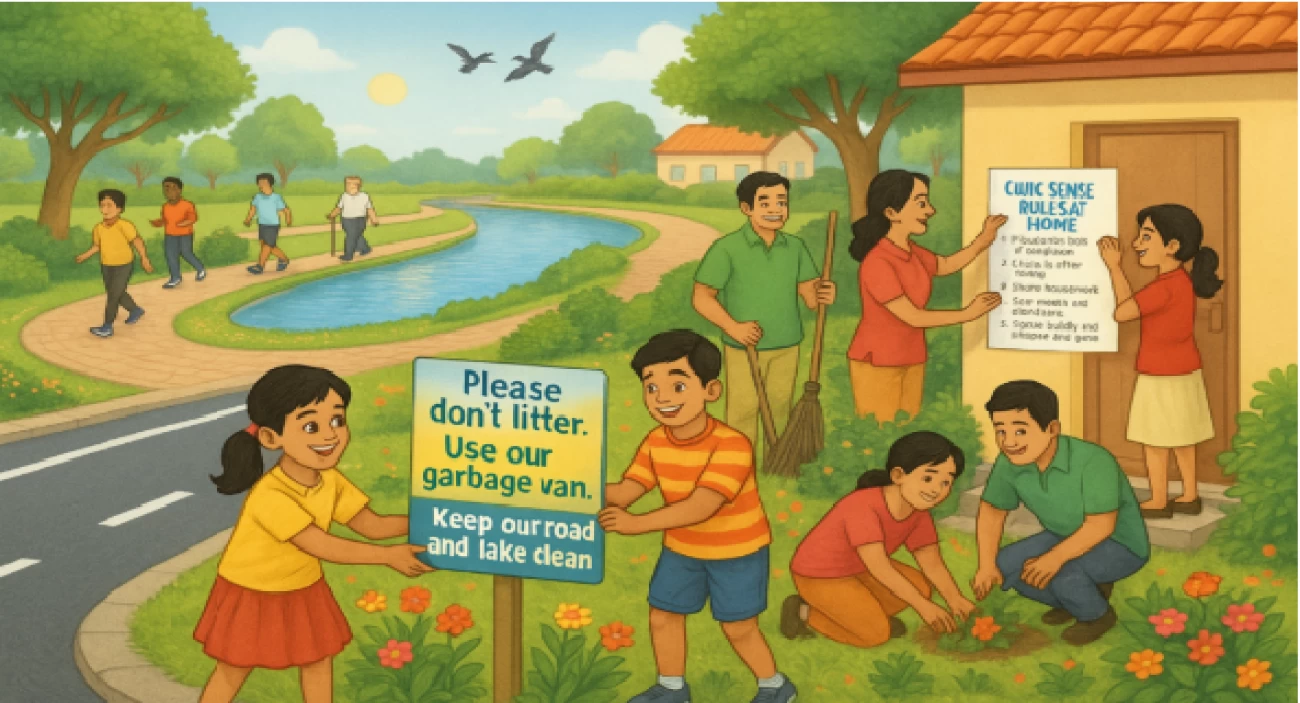
Why It Matters and Why It Must Begin with Children
India is a country rich in culture, diversity, and values. From respecting elders to living in close-knit communities, civic values have traditionally been an integral part of Indian society. However, in today’s rapidly urbanising and fast-paced world, these values are increasingly being challenged. Traffic indiscipline, littering, lack of public responsibility, intolerance, and insensitive behaviour in public and digital spaces point to a growing gap in civic sense.
Civic sense is no longer something that can be assumed or picked up automatically. It must be consciously taught, nurtured, and practiced, especially from a young age. Schools and families together play a crucial role in shaping children into responsible citizens who understand their duties toward society.
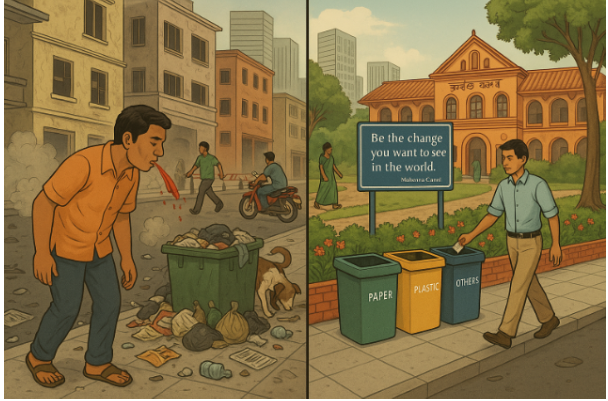
What is Civic Sense?
Civic sense refers to an individual’s awareness of their rights, duties, and responsibilities as a member of society. It includes:
- Behaving respectfully toward others
- Following rules
- Caring for public property
- Maintaining cleanliness
- Showing empathy Contributing positively to the community
In simple terms, civic sense is about understanding that one’s actions affect others. Whether it is standing in a queue, obeying traffic rules, avoiding littering, using public spaces responsibly, or communicating respectfully—civic sense governs everyday behaviour in a society.
In India, the lack of civic sense is often visible in daily life through:
- Overcrowded public space
- Disregard for traffic rules
- Damage to public property
- Improper waste disposa
- Irresponsible digital behaviou
While laws and regulations exist, behaviour often does not align with them. One of the reasons for this gap is that civic behaviour is frequently viewed as someone else’s responsibility, be it the government, the authorities, or society, rather than an individual’s duty. This mindset leads to a lack of accountability and weakens collective responsibility.
Why Civic Sense Is Needed More Than Ever
India’s growing population, increasing urban density, and digital expansion make civic sense essential for peaceful coexistence. Without civic responsibility, even well-developed infrastructure and strong laws cannot function effectively.
A strong sense of civic responsibility helps:
In today’s world, civic sense also extends to digital spaces. Responsible online behaviour, empathy in communication, and awareness of digital safety are now integral parts of being a good citizen.
- Maintain cleanliness and public hygiene
- Reduce conflicts and promote social harmony
- Encourage respect for diversity and differences
- Strengthen democratic values
- Build safer physical and digital environments
Why Civic Sense Must Begin with Children
Habits formed during childhood often shape behaviour in adulthood. Teaching civic sense early helps children internalise values rather than merely follow rules out of fear of punishment. When children understand why certain behaviours matter, they are more likely to practice them naturally.
For children, civic sense supports:
- Emotional regulation and empathy
- Respect for rules and authority
- Responsible decision-making
- Cooperation and teamwork
- Awareness of social and environmental impact
A child who learns to wait their turn, respect public property, care for the environment, and express emotions respectfully grows into an adult who contributes positively to society.

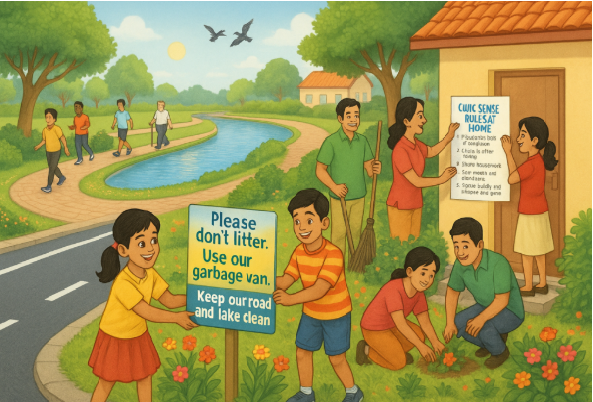
Schools are one of the most influential spaces for shaping civic behaviour. Beyond academics, schools provide daily opportunities for children to practice responsibility, cooperation, and respect.
Civic sense can be nurtured in schools through:
- Stories, discussions, and real-life examples
- Classroom rules that emphasise respect and fairness
- Group activities that encourage teamwork and empathy
- Reflection exercises that help students understand consequences
- Integration of environmental awareness and digital citizenship
When schools create environments where values are lived and practiced, children learn civic sense not as a subject, but as a way of life.
Civic sense is the foundation of a healthy, respectful, and progressive society. By nurturing civic sense from an early age, especially through schools, India can move towards a future where citizens are not only educated, but also conscious, compassionate, and socially responsible.

